Clean Smoke: Fire Management for Better Barbecue
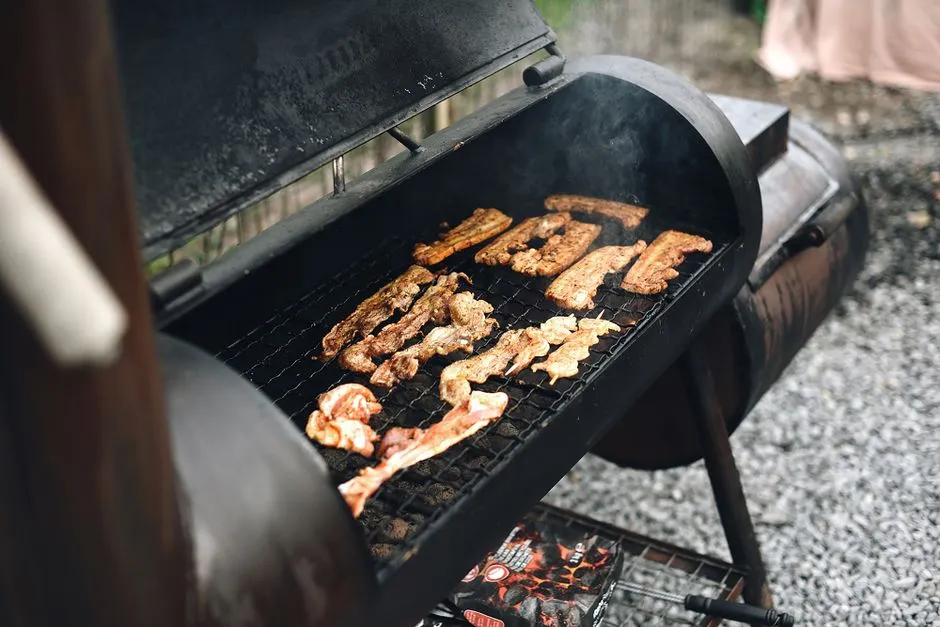
- Clean smoke comes from an established, oxygen-fed fire
- How can you tell whether barbecue smoke is clean?
- Start with a safe outdoor location
- Establish the coal bed and use identified fuel
- Follow the manual for exhaust and temperature control
- Add small fuel before the fire collapses
- Match smoke to the food and complete shutdown
- Sources
Clean smoke comes from an established, oxygen-fed fire
Clean smoke is thin, faint blue, or nearly invisible exhaust from suitable dry fuel burning efficiently. “Thin blue smoke” is useful shorthand, but color alone cannot certify combustion or safety. Background and light change its appearance, so watch the coal bed, temperature, airflow, aroma at a safe distance, and exhaust together.
Dense smoke tastes bitter when fuel smolders; better combustion fixes the cause.
How can you tell whether barbecue smoke is clean?
| What you observe | Likely condition | Safe next check |
|---|---|---|
| Faint or nearly invisible exhaust, stable heat, mild wood aroma | Established, efficient burn | Hold approved settings; do not add wood for visibility. |
| Brief pale plume just after dry fuel is added | New fuel heating and igniting | Keep food away until fuel is established and exhaust thins. |
| Persistent dense gray or white smoke, sharp, creosote-like, or acrid odor, weakening heat | Smoldering, restricted draft, damp fuel, or oversized fuel | Follow the manual, clear exhaust, make one permitted intake or fuel change, then wait several minutes. |
| Smoke produced when grease reaches the fire | Grease contacting the heat source | Use the drip system and manual-approved fire procedure; never use water on burning grease. |
Never lean over or deliberately inhale exhaust. Carbon monoxide is odorless and colorless, so smell and smoke color cannot establish safety.
Start with a safe outdoor location
Operate a grill or smoker only outdoors as its manufacturer directs, away from doors, windows, vents, structures, vegetation, and combustibles. Never use one in a house, garage, tent, shed, camper, porch, carport, or partly enclosed area.
CDC symptoms include headache, dizziness, weakness, upset stomach, vomiting, chest pain, and confusion. Move everyone into fresh air immediately and call emergency services; do not wait for every symptom. Never move a lit or warm cooker into an enclosure.
Attend the cooker, keep children and pets clear, and check local restrictions during dry or windy conditions. The CPSC advises keeping a fire extinguisher nearby and ensuring users know how to operate it. For fire, move away and call emergency services immediately; follow dispatcher instructions.
Establish the coal bed and use identified fuel
Light an appropriate quantity of charcoal or kindling by a manufacturer-approved method. Never use gasoline, paint thinner, or another improvised accelerant, and never add liquid starter after ignition has been attempted. Let starter smoke clear and fuel become visibly established before adding food.
In a charcoal cooker, glowing coals stabilize heat while a small hardwood chunk supplies flavor. In an offset, a compact active fire with visible flame often burns cleaner than a large smoldering pile. Offsets, kettles, kamados, drums, pellet units, and water smokers move air differently; follow the exact manual.
Use identified, dry hardwood or fruitwood prepared for cooking; UF/IFAS advises avoiding softwoods such as pine and cedar. Archived EPA guidance excludes painted, glued, pressure-treated, and moldy wood. Also reject chemically exposed or unidentified wood. NDSU notes that pine resin tars produce off-flavors. See the smoker skills collection for more fuel guidance.
Follow the manual for exhaust and temperature control
Keep the exhaust open unless the manufacturer explicitly says otherwise; choking it can trap harsh smoke and weaken the fire. Cooker designs differ, so follow the manual for permitted fuel and intake controls. Move one control at a time and wait several minutes before another change.
For hot-smoking meat and poultry, USDA guidance says to maintain 225°F (107.2°C) to 300°F (148.8°C) throughout cooking. Use one cooker thermometer near the food and a separate food thermometer for the cut-specific safe endpoint.
Add small fuel before the fire collapses
Learn how long one load burns. Add a small amount while a healthy coal bed remains rather than burying weak coals under cold fuel. Give fresh fuel oxygen and time. If smoke remains dense, creosote-like, or acrid, keep food away while following the manual’s correction procedure.
Permitted corrections may include a modest intake change, clearing an obstructed exhaust, or reducing oversized fuel. Remove burning or smoldering fuel only when the manual expressly allows it, using its specified tools and protective equipment. Use the drip-management system; clean accumulated grease only after the cooker is fully cold.
Match smoke to the food and complete shutdown
A few clean additions can season a long cook; continuous heavy smoke can bitter bark and mask seasoning. Smaller foods need less exposure than large cuts. Our baby back ribs at 250°F recipe establishes smoke early before prioritizing steady heat and tenderness.
Record fuel, weather, vents, temperature behavior, and flavor. Change one variable next time. After cooking, follow the manufacturer shutdown procedure. Once coals are fully cool, the U.S. Fire Administration says to place them in a lidded metal can; keep that container outdoors on a noncombustible surface.