Baby Back Ribs vs. Spare Ribs: Choose the Cut
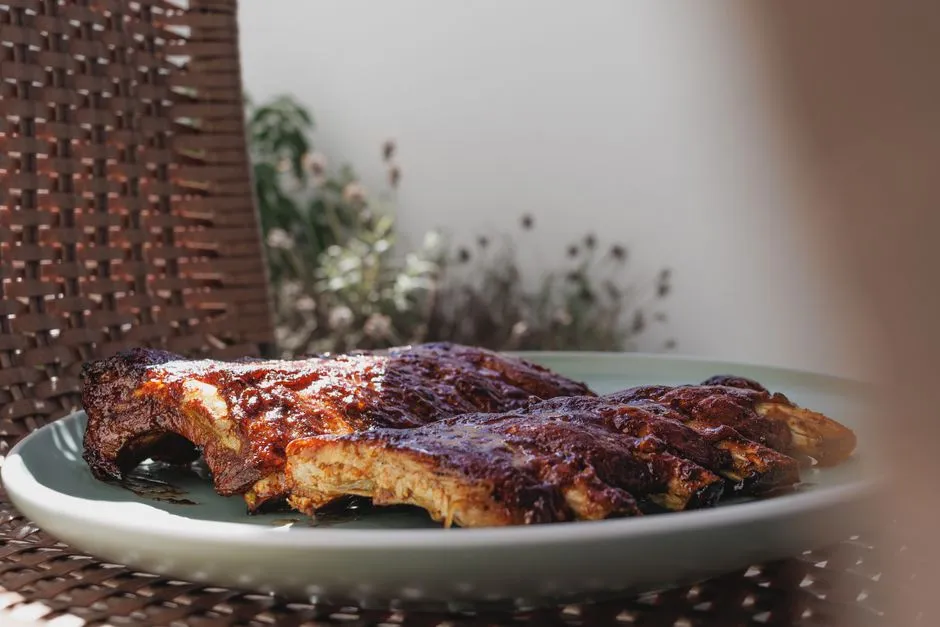
- What is the difference between baby back ribs and spare ribs?
- Baby back ribs are back ribs, not ribs from a baby pig
- Spareribs come from the belly side
- What are St. Louis-style ribs?
- Which rack fits your smoker?
- Should you cook baby backs and spareribs for the same time?
- Do the cuts need different smoke?
- A five-point package check
- Sources
What is the difference between baby back ribs and spare ribs?
Baby back ribs come from the pork loin, near the spine; spare ribs come from the belly side of the rib cage. Baby backs are smaller, while full spareribs are larger and include cartilage and adjoining sections. St. Louis-style ribs are spareribs trimmed into a straighter, more rectangular rack. Choose baby backs for a compact curved rack and spare or St. Louis ribs when you want a broader rack and more trimming options.
That is the buying decision in four lines. The cooking decision takes one more: do not give two visibly different racks the same timeline merely because both say “pork ribs.” Thickness, starting temperature, pit behavior, wrapping, and the texture you want still control the cook.
| Cut | Where it comes from | Shape at the counter | Useful reason to choose it |
|---|---|---|---|
| Baby back ribs | Blade and center portion of the loin | Smaller, curved rack | Compact rack and familiar individual bones |
| Full spareribs | Belly side, with ribs and costal cartilage | Larger, less uniform slab | More of the full rib section and room to trim |
| St. Louis-style ribs | A squared cut of spareribs | Flatter, straighter rectangle | Even presentation and easier portioning |
| Rib tips | Lower portion removed while making a St. Louis cut | Irregular strip with cartilage | Separate cook or snack, not waste |
Baby back ribs are back ribs, not ribs from a baby pig
The National Pork Board's pork-rib guide uses “back ribs,” “loin back ribs,” and “baby back ribs” for the same family of cut. It places them in the blade and center section of the pork loin and explains that “baby” refers to their smaller size relative to spareribs.
The U.S. Department of Agriculture's draft Institutional Meat Purchase Specifications for fresh pork defines Item 422 back ribs as coming from a loin and containing at least eight ribs, while noting that a purchaser can specify the number. This is a food-service procurement specification, not a promise that every supermarket package follows the draft item exactly.
At the counter, look for a curved rack with relatively short bones. Compare the thickness from end to end. A rack with one very thick end and a thin tail can still cook well, but the thin end will reach your tenderness cue first.
Our baby back rib smoking guide gives a complete 250°F method for that cut. It is not a generic clock for every rack labeled ribs.
Spareribs come from the belly side
The National Pork Board describes spareribs as coming from the belly of the hog and as larger than back ribs. USDA's draft Item 416 is more technical: it describes spareribs as containing at least 11 ribs with associated costal cartilage and allowing portions of the sternum and diaphragm under defined trimming rules.
That extra geography explains the full rack's less regular outline. One end carries smaller bones and cartilage, and the flap and skirt can vary with trimming. Before seasoning, open the package and identify what is actually attached rather than trying to make the rack resemble a photograph through optimism alone.
For an even cook:
- Remove any loose flap that would burn before the main rack is tender.
- Trim only very thin, dangling pieces unless you intend to square the rack fully.
- Cook usable trimmings separately and begin checking them earlier.
- Note the thickest and thinnest zones before placing thermometer probes.
- Keep the membrane decision consistent across racks when comparing a cook.
None of those steps converts a full spare rack into a St. Louis rack automatically. That name refers to a specific squared style of trimming.
What are St. Louis-style ribs?
St. Louis-style ribs begin as spareribs. The breastbone, cartilage-heavy edge, and irregular portions are trimmed away to create a flatter rectangle. The National Pork Board describes the result as a squared, straight, flat cut.
The practical advantage is geometry. A straight rack fits a grate more predictably, divides into portions neatly, and presents bones of more similar length. It does not become a loin back rib, and “St. Louis” does not identify a sauce, rub, or cooking method.
If a package says “St. Louis-style,” check the contents anyway. Look for:
- a genuinely squared rack rather than a full spare slab with one edge lightly trimmed;
- consistent thickness across most of the rack;
- no torn cryovac or excessive leaked liquid;
- a sell-by or use-by date you can follow;
- a weight that fits both the grate and the number of diners.
Rib tips are the lower strip removed during this trim. They contain cartilage and irregular pieces, so they do not cook or portion like the finished rectangular rack. Keep them as a separate item and judge them on their own texture.
Which rack fits your smoker?
Measure the usable grate, not the outside of the cooker. Leave room for airflow and for safe access with tongs. A rack that touches the lid, firebox wall, or another slab may cook differently at those contact points.
Choose baby backs when:
- grate width is limited;
- you want a smaller curved rack;
- you are following a tested method written specifically for loin back ribs;
- you prefer portions built around the smaller bones.
Choose full spareribs when:
- you want the complete belly-side rack;
- you are comfortable managing uneven sections;
- you want rib tips and other trimmings for a separate cook;
- the larger slab fits with clear space around it.
Choose St. Louis-style ribs when:
- a rectangular rack fits the cooker better;
- even presentation and portioning matter;
- you do not want to do the full spare-rib trim yourself;
- you want the spare-rib cut without the cartilage-heavy edge attached.
Price per pound cannot settle this alone. Compare the usable rack, whether tips are included, the amount of trimming you plan to do, and how many portions the package realistically provides. There is no honest universal winner.
Should you cook baby backs and spareribs for the same time?
No fixed conversion works across all racks. Baby backs are smaller as a cut, but an unusually thick loin-back rack can take longer than a thin rack beside it. Full spareribs also have irregular zones that may finish at different times.
Build the cook around observations:
- Hold pit temperature steady enough to make comparison possible.
- Record each rack's cut, weight, and thickest zone.
- Place racks where heat and airflow are comparable, or rotate only when your cooker requires it.
- Begin checking the smaller or thinner rack first.
- Look for flexible meat between bones and a probe entering the thick meat with little resistance.
- Confirm food safety with a clean thermometer in the thickest usable meat, away from bone.
USDA's current fresh-pork safety guidance gives 145°F with a three-minute rest as the minimum for whole cuts of pork. It also says consumers may cook pork to higher temperatures for preference. That minimum is a safety floor, not a guarantee that connective tissue in barbecue ribs has softened to your preferred texture.
Ribs are thin and bony, so a thermometer reading can be awkward. Insert a suitable probe into the thickest meat without touching bone, and verify more than one location. Do not rely on meat color alone to establish safety.
Do the cuts need different smoke?
They need the same clean fire discipline. Cut choice does not rescue a smoldering, oxygen-starved fire. Our clean-smoke guide covers fuel ignition, airflow, exhaust, and the corrections to make when smoke turns dense or bitter.
Because racks differ in shape, their placement may change. Keep thin ends away from the hottest zone. Do not crowd the grate until airflow stalls. If one rack is clearly ahead, remove it when it reaches the intended safety and texture checks instead of leaving it in until the other catches up.
Smoke and heat are fire and carbon-monoxide hazards. Use smokers outdoors in a well-ventilated location, follow the appliance manual and local fire restrictions, and keep the cooker away from structures and combustible material as its manufacturer directs. Never move a hot cooker or bring it into an enclosed space.
A five-point package check
Before buying, answer five questions:
- Does the label say back ribs, spareribs, or St. Louis-style ribs?
- Does the shape in the package match that description?
- How much thickness variation will the cook need to accommodate?
- Does the rack fit the usable grate with airflow space?
- Are you paying for a ready-trimmed rectangle or for a full rack whose trimmings you will use?
Then choose the recipe written for that cut. The label gets you into the right family; the actual rack tells you how to manage the fire.
Sources
- National Pork Board, “Pork Ribs” — supports the cut locations and its distinctions among back ribs, spareribs, St. Louis-style ribs, rib tips, and country-style ribs. Accessed September 4, 2026.
- USDA Agricultural Marketing Service, draft “Institutional Meat Purchase Specifications: Fresh Pork Series 400” — supports the explicitly procurement-scoped Item 416 sparerib and Item 422 back-rib definitions. Accessed September 4, 2026.
- USDA Food Safety and Inspection Service, “Fresh Pork From Farm to Table” — supports raw-pork handling and the 145°F minimum with a three-minute rest for whole cuts. Accessed September 4, 2026.